
Planning your parental leave

Your guide to navigating leave as a doctor
Parental leave is an exciting milestone. As a doctor, it may also mean adjusting your training, practice and medical indemnity cover. This page summarises the key medico-legal, professional and personal steps to consider, so you can focus on your family while staying on top of your professional obligations.
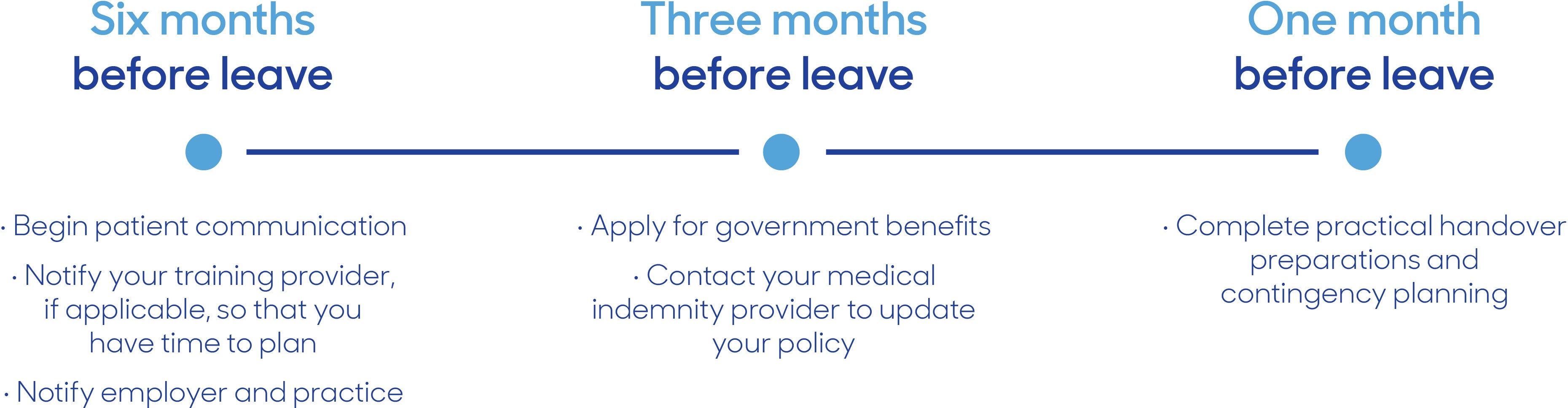
Key timeline preparing for leave
Training and employment
- Training programs: Notify your college or training provider three to six months before leave to allow time for rotation and exam adjustments.
- Employer or practice communication: Discuss antenatal care needs, leave dates, and return-to-work arrangements.
- Contract review: Check employment contracts for leave entitlements and requirements.
Patient and referrer communication
- Patient notification: Begin informing patients six months before leave, especially in GP specialist or non-GP specialist practice.
- Referrer updates: Notify regular referrers to promote continuity of patient care.
- Care transitions: Arrange colleague coverage for ongoing patient needs. Communicate with your practice to understand the support and expectations for handover of patient care and follow up.
Registration and continued profession development (CPD)
- Recency of practice: Ensure that you are complying with your recency of practice guidelines when you are on leave and looking to return to work.
- Ahpra: Contact about potential reduced registration fees during leave.
- CPD planning: Consider exemptions for extended leave (6+ months continuous).
- Online learning: Avant members can access free CPD courses and webinars.
- Handover document: Create patient follow-up lists at least one month before leave.
- Recall management: Confirm process for managing patient recalls and test results with your employer or practice.
- Solo specialists: Arrange colleague coverage for ongoing patient care and handover.
- Communication plans: Set up systems for handling calls and enquiries.
- Emergency protocols: Prepare emergency handover for early labour or complications.
Healthcare planning
- Birth preferences: Choose between public or private care and consider the type of birth you would like and communicate with your general practitioner about the next steps.
- Leave duration: Plan total leave time and whether to take it continuously or in stages.
- Insurance check: Contact your private health insurer to ask about cover for yourself and the baby, and waiting periods.
- Hospital bag: Pack a bag for the hospital and purchase the items you need for a baby. Here is a useful guide from Tressillian.
- Documentation: Know yours and your partner's (if relevant) customer reference number for Centrelink and Medicare purposes. This will likely be more important post-birth if you do not access the Australian Governments maternity and paternity support.
Government entitlements
- Parental leave pay: Apply up to three months before due date.
- Additional benefits: Explore Family Tax Benefit, partner leave, and childcare subsidies.
- MyGov setup: Link accounts to Centrelink and Medicare.
Financial planning
- Budget assessment: Plan for reduced income and baby-related expenses.
- Property considerations: Discuss loan payment options with your lender to remove some of the pressure on you while you are not working.
- Emergency fund: Build buffer for unexpected costs.
Personal considerations:
- Plan childcare options: Start looking at the childcare options and a childcare centre. Tour some centres and place your baby on the waitlist (sometimes there are long waitlists).
- Understand your support options: Consider joining a medical social media support page. Try not to research too much, everyone's journey is different.
- Consider pre-birth education: Consider pre-birth considerations about the birthing process for you, plus, breastfeeding education. In some states and council areas, breastfeeding education may be free to access.
- Birth registration: Register baby's birth and obtain Centrelink CRN.
- Medicare linking: Link baby to Medicare system.
- Health insurance updates: Add baby to private health insurance. Contact your insurer to ask about cover for yourself and your baby, and waiting periods,
- Vaccination planning: Schedule based on state/territory requirements.
- Support networks: Lean into your support network and engage with new parent groups.
- Estate planning: Review and update will and estate planning.
- Personal insurance review: Assess income protection, life, and TPD insurance.
- Locum or telehealth work: If you plan to do locum or telehealth work while on leave, contact your medical indemnity provider to understand and update your cover.
- Employment and training: Review how working may impact your employment contract and or training as approval may be required.
Medical indemnity options
It’s important to ensure your medical indemnity cover reflects your change in circumstances. If you’re taking an extended break, you may be eligible for the government’s Run-off Cover Scheme (ROCS), or you can update your policy to reduce billings (and therefore reduce the cost of your indemnity) during your leave.
Choose the right indemnity cover for your situation in order to maintain the appropriate cover to meet your needs. Each option has different benefits and requirements:
Important timing
Start this process at least two months before your leave begins. Some options require government approval, so early planning is important.
| Run-Off Cover Scheme (ROCS) | Move to a non-practising category | Modify your gross billings |
This provides cover for your past practice, so if a claim arises while you are on leave, you will have cover. You cannot provide healthcare when on leave with this option. There is no cost to move to this option as all medical practitioners pay a ‘ROCS Levy’ to the government as part of their indemnity insurance. | This provides cover for your past practice and allows you to retain Avant member benefits such as the Retirement Reward Plan, access to Avant Travel Cover and the Loyalty Reward Plan. The cost starts from $80 per policy period. You cannot provide healthcare when on leave with this option. | This provides cover for practitioners wanting to keep their Avant benefits and provide healthcare for example locum work while on leave. You can modify or reduce your billings to reflect the healthcare you provide during this period. |
- Update your details: Contact your medical indemnity provider and update your details to ensure that you have appropriate indemnity arrangements in place.
- Communication: Keep employers, practices and training providers updated on return dates and what you will require to assist your return to work such as breast feeding support and flexible return options.
- CPD maintenance: Continue professional development through your CPD home.
- Patient notification: Work with your medical practice to inform your patients you have returned from leave.
- Transitioning to private practice: Some doctors use this time as an opportunity to plan a move to private practice. Avant can support this journey and provide complimentary support to navigate setting up systems and processes. Schedule a call with Avant's Risk advisory service to discuss your transition to private practice.
- You may have access to additional medical indemnity premium support through the governments Premium Support Scheme. Find out more information.
- Support network and childcare: It is common to experience sickness when a child starts daycare be prepared and ask for help.
- Government support: Complete your Childcare Subsidy paperwork through Centrelink.
Support after pregnancy loss
Experiencing the loss of a baby is deeply personal and incredibly difficult. You can access specialised grief and loss services through the Stillbirth Foundation Australia, which also provides resources for navigating your return to work.
As an Avant member, you can access our complimentary Personal Support Program for confidential counselling and wellbeing support. You may also be eligible for government assistance during this difficult time.
ROCS provides cover for your past practice. If you move to a ROCS policy while on maternity leave, you may lose your Avant member benefits. Keeping an Avant policy (even with limited cover) maintains your benefits and helps returning to work smoother. This also means you will be eligible to take out an Avant Travel Cover policy while you are on leave.
Yes, but you'll need appropriate indemnity cover and should check how this affects government payments. The ‘Modified billings’ option might be suitable if you plan to work occasionally.
Start notifying patients six months before your leave, especially if you're in general practice or private specialist. This gives them time to arrange alternative care and ensures continuity.
Prepare an emergency handover document in advance. This should include urgent patient information, pending results, and contact details for covering colleagues. Keep this updated throughout your pregnancy.
Our member support team understands the unique challenges doctors face during parental leave. We're here to help you navigate this journey successfully.
Professional indemnity insurance products are issued by Avant Insurance Limited (ACN 003 707 471, AFSL 238 765) (‘AIL’). The information provided by AIL is general advice only and has been prepared without taking into account your objectives, financial situation and needs. You should consider these, having regard to the appropriateness of the advice, and the relevant Product Disclosure Statement or policy wording (available at www.avant.org.au), before deciding to purchase or continue to hold these products.