

Claims insights: hospital-based early career doctors
| Overview | Practice points |
|
|
Incidence and types of matter are based on all matters indemnified by Avant for early career doctors from FY 2021-25. Underlying themes and outcome of complaints are based on regulatory complaints closed from FY 2019-25.
Hospital-employed doctors are generally covered by their hospital for civil liability for patient injury, while Avant provides cover for other medico-legal matters including regulatory complaints, employment and training disputes, coronial matters, and other issues. Avant members also have access to Avant’s Medico-legal Advisory Service (MLAS) for expert guidance and support when challenges arise.
Medico-legal calls
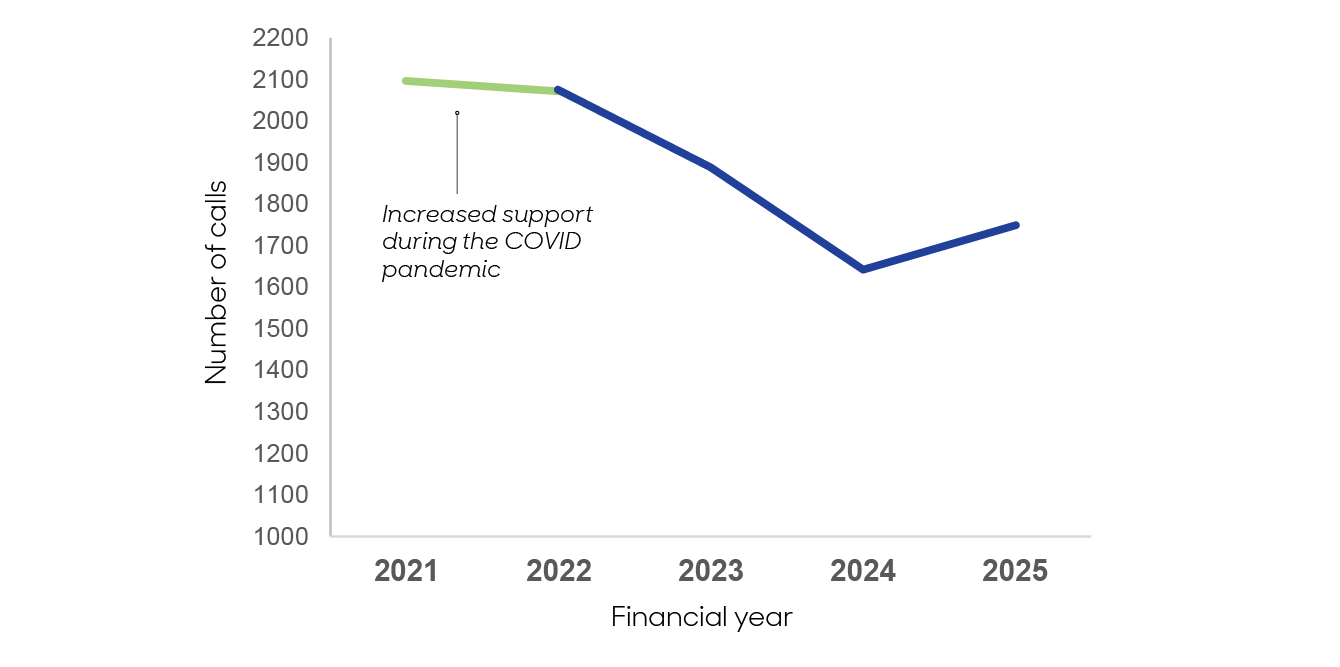
MLAS received an average of 1800 calls from hospital-based early career doctors each year with volumes rising to more than 2000 calls during the COVID pandemic.
Most common topics discussed
- Clinical issues (e.g. treatment-related incidents/adverse events, COVID-related, patient relationships, medical records, confidentiality)
- Employment concerns (e.g. employment disputes, contracts)
- Patient complaints (e.g. responding to complaints)
- Court documents and requirements (e.g. responding to subpoenas for medical records)
- Coronial matters (e.g. preparing a coronial statement).
The above review is based on an analysis of MLAS calls from hospital-based early career doctors from FY2021-25.
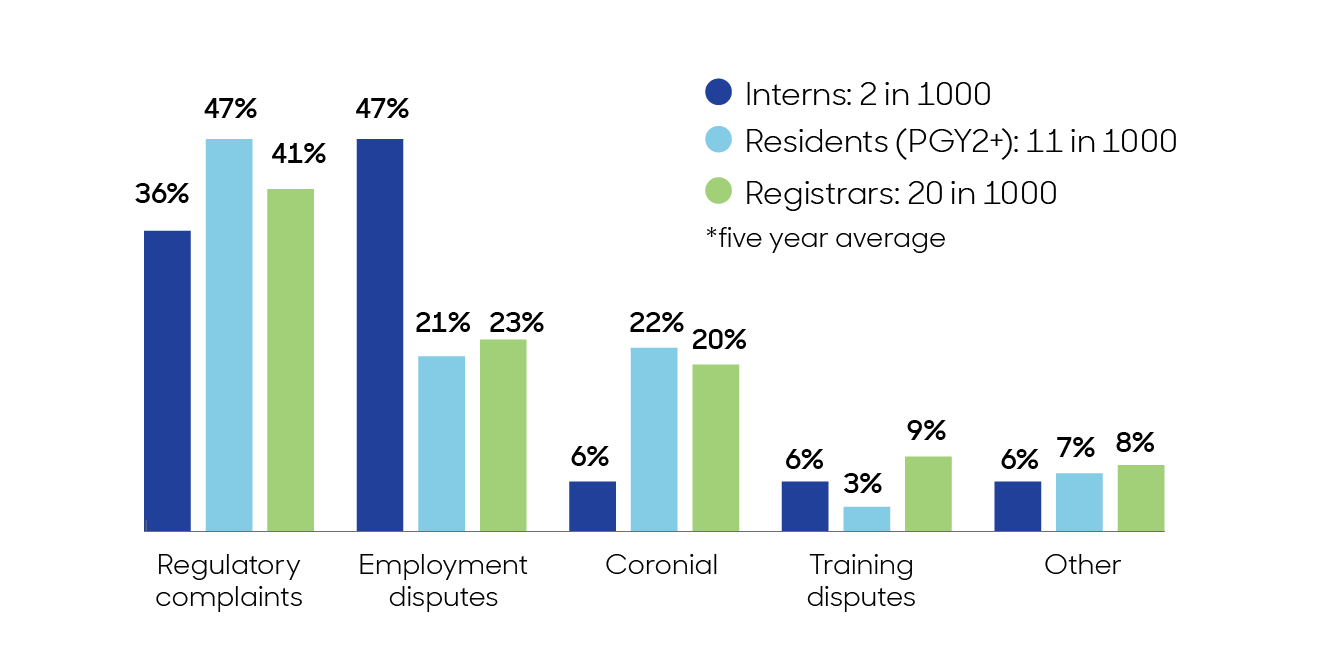
Annual incidence* of hospital-based early career doctors who had a medico-legal matter and the types of matters
Most common themes in regulatory complaints
| Interns | Residents (PGY2+) | Registrars |
| 65% Practitioner behaviour e.g. allegations of impairment (mental or psychological) | 27% Practitioner behaviour e.g. allegations of impairment (mental or psychological, substance abuse), communication issues | 30% Practitioner behaviour e.g. communication issues, impairment (mental or psychological, substance abuse), patient boundary issues |
| 18% Medication e.g. inappropriate prescribing of drugs of dependence and other medication, self-prescribing | 14% Procedural/surgical e.g. poor performance/skill/competence in relation to specific procedures or surgeries | |
| 18% Management/treatment e.g. complaints about provision of treatment (inadequate or no examination, treatment plans) |
Regulatory complaints outcomes for hospital-based early career doctors overall
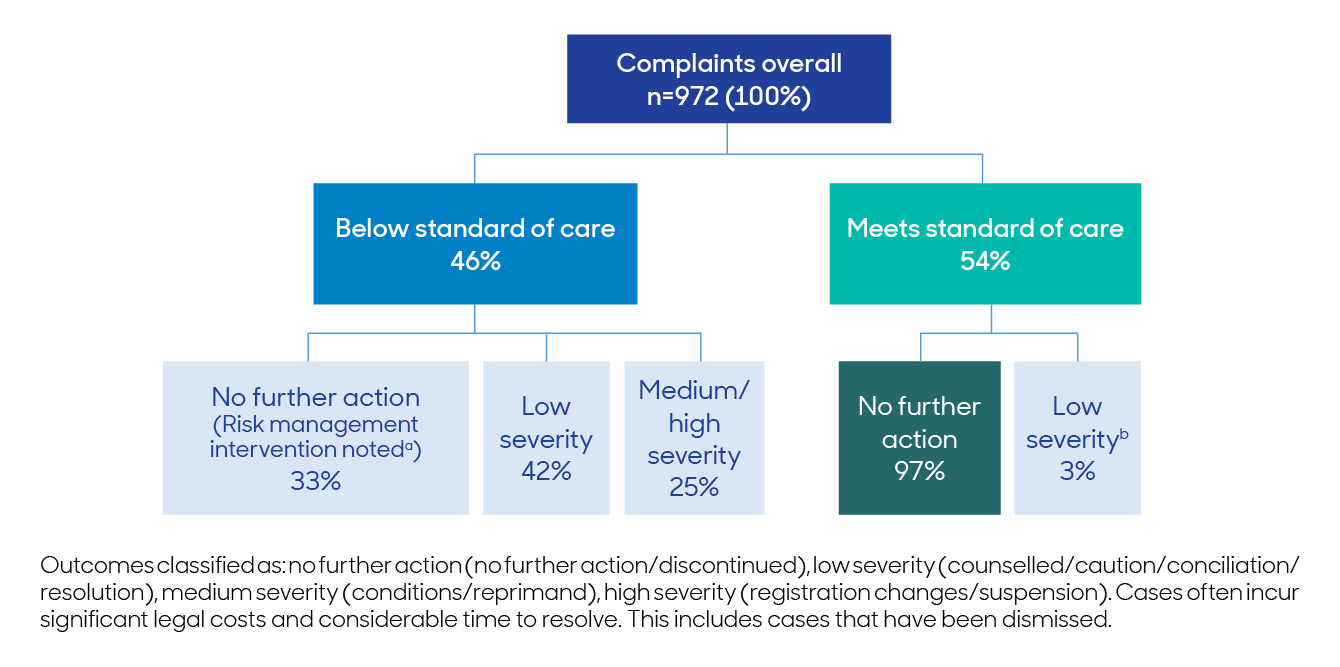
- More than half of complaints (54%) were considered to have met the standard of care. Of these, nearly all were finalised with no further action.
- Less than half of complaints (46%) were assessed to not meet the standard. One-third was finalised with no further action with risk management intervention contributing to this outcome. Other cases had either low severity (42%) or medium/high severity (25%) outcomes.
Notes
This analysis was conducted on regulatory complaints made against hospital-based early career doctors closed from July 2018 to June 2025. Only complaints that were risk assessed and with a known outcome were included.
a) No further action may have been taken despite a below standard of care assessment. This outcome would have considered the actions already carried out by the member including proactive risk management interventions made or education such that there is no future risk.
b) In some cases, a practitioner who has met the requisite standard of care may agree or be required to go through an additional process, such as a conciliation, for the parties to discuss concerns and explore mutually acceptable resolutions.
Glossary
- Matters include claims, complaints, coronial cases and other matters such as employment disputes and Medicare.
- Claims refers to claims for money, compensation and civil claims.
- Complaints relates to formal complaints to regulators including Ahpra, HCCC in NSW and OHO in Queensland.
- Employment disputes are matters where Avant defends members against complaints or supports members to resolve employment issues.
- Training disputes are disagreements that arise during a doctor’s vocational training, involving their training provider, hospital, or a supervisor, assessor, or reviewer.
More information
If you receive a claim or complaint, contact us on 1800 128 268 for medico-legal advice on how to respond- available 24/7 in emergencies.
Avant’s Risk Advisory Service provides personalised support to help proactively reduce your exposure to claims. You can benefit from a personalised risk assessment with a focus on strategy to improve your medical records. Contact us at Risk.Advisory@avant.org.au Risk.Advisory@avant.org.au or visit Risk Advisory Services - Avant.
Visit our Insights & Resources page for further educational content including webinars, eLearning courses, case studies, articles and factsheets.
Useful resources:
Completing a death certificate
Coronial investigations and inquests
Early career doctors – managing complaints matters
Health and well-being support for Avant members
IMPORTANT: Avant routinely codes information collected in the course of assisting member doctors in medico-legal matters into a standardised, deidentified dataset. This retrospective analysis was conducted using this dataset. The findings represent the experience of these doctors in the period of time specified, which may not reflect the experience of all doctors in Australia. This publication is not comprehensive and does not constitute legal or medical advice. You should seek legal or other professional advice before relying on any content, and practise proper clinical decision-making with regard to the individual circumstances. Persons implementing any recommendations contained in this publication must exercise their own independent skill or judgement or seek appropriate professional advice relevant to their own particular practice. Compliance with any recommendations will not in any way guarantee discharge of the duty of care owed to patients and others coming into contact with the health professional or practice. Avant is not responsible to you or anyone else for any loss suffered in connection with the use of this information. Information is only current at the date initially published [February 2026].